IPL media rights bidding structure, Yadav investigation and DRS in Indian cricket
DRS in India - England test series
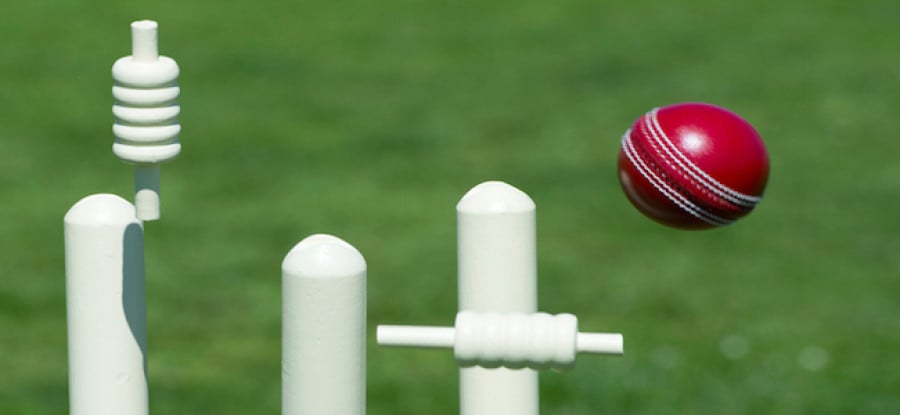
On 21 October, the Board of Control for Cricket in India (BCCI) announced that it will be using the Decision Review System (DRS) which started on 9 November in the India England test series. Implementing DRS on a trial basis, the BCCI will be evaluating the DRS over time.1 The DRS is used to determine calls such as outs caused by Leg Before Wicket (LBW) which depends on determining the trajectory of the ball after it is bowled and its respective impact, as well as how the ball is delivered; see Law 36.1 and 36.2 of the "Laws of Cricket".2
The use of the DRS is outlined in multiple International Cricket Council (ICC) regulations. According to Law 3.1.6 of the "Standard Test Match Playing Conditions" of the ICC, when the DRS is used in Test Matches, “ICC will appoint a third umpire who shall act as the emergency umpire and officiate in regard to the DRS.”3 The specifics of how the DRS is used to reach a final decision are outlined in Appendix 1 of the "Standard Test Match Playing Conditions" of the ICC.4 In addition to the playing conditions, the ICC has published a document called “Third Umpire – Decision Review System”.5 This document is complementary to the Standard Test Match Playing Conditions and further outlines the consultancy and decision making process.
According to the Indian Express article, the DRS was last used by India in 2008 in a bilateral series against Sri Lanka. India has also used the DRS in national tournaments as well as the World Cup.6
Whilst the DRS was implemented in the 2015 World Cup, it is, in the author’s opinion, a positive step that the BCCI are evaluating the system again this year as having a universally agreed protocol can only be a benefit for sport.
CBI investigation into the alleged sabotage of Yadav
Readers will remember that Indian wrestler, Narsingh Yadav, was banned by CAS Ad Hoc Panel at the Rio Olympic Games from competing at the Olympics for an anti-doping violation. According to Yadav’s pleadings, presumably, a junior wrestler, Jithesh Kumar, committed an act of sabotage by mixing banned substances into his meals with the intention of making him test positive for a doping offence. The CAS decision mentions that Jithesh is part of Yadav’s rival, Sushil Kumar’s, “entourage”. In that, Jithesh may have wanted to assist Kumar succeed, and eliminating Yadav’s chances to compete would be advantageous for Sushil Kumar’s ability to compete in the Games. Yadav was initially cleared by the National Anti Doping Association, who accepted his story. However, WADA appealed the decision to CAS, who rejected Yadav’s story and administered him a four-year ban. (For more information on the background, see here.7)
However, the story is not yet over. In an interesting turn of events, the Wresting Federation of India have requested that India’s Central Bureau of Investigation (CBI) conduct a criminal investigation into the alleged sabotage.8 The CBI have now re-registered a First Information Report (FIR), which was initially registered by the Haryana Police (state police).9 In India, a FIR is the first step in setting “the criminal justice in motion”. It is a complaint filed by the state police upon receiving “information about the commission of a cognizable offence.”10 In this context, a cognizable offence is one that allows the police to make an arrest without a warrant. It is also an offence that the police can begin investigating on their own, without a court order.11
- Anti-Doping Board of Control for Cricket in India (BCCI) Broadcasting Court of Arbitration for Sport Anti-Doping Division Cricket ICC Decision Review System (DRS) India Indian Penal Code Indian Premier League (“IPL”) International Cricket Council (ICC) Justice Lodha Committee recommendations Media Rights Olympic Paralympic Standard Test Match Playing Conditions